
The Proof-Backed Resume: How to Turn Claims Into Verifiable Evidence

May 18, 2026
|
12 min read
Learn how to replace vague resume claims with measurable achievements, proven workflows, and tangible evidence that builds recruiter trust.
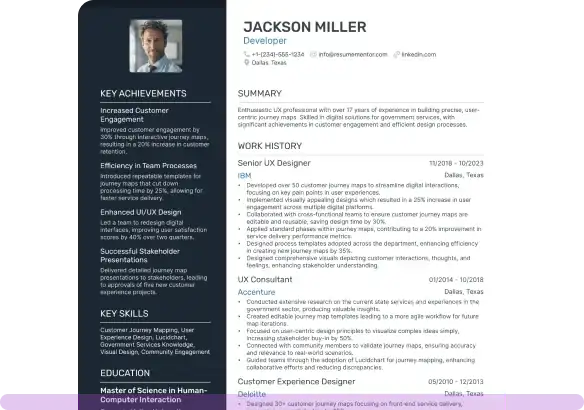
Imagine sitting at a desk and reading two hundred resumes in a single afternoon. Every single applicant claims to be a "results-driven team player" blessed with "excellent communication skills" and a "detail-oriented mindset." After the fiftieth identical application, these empty buzzwords completely lose their meaning. They blur together into a wall of meaningless corporate jargon.
Hiring managers and technical recruiters are experiencing a massive crisis of trust right now. They know exactly how easy it is for an unqualified candidate to type a list of positive adjectives onto a piece of paper. Because of this widespread inflation of skills, recruiters operate from a baseline of deep skepticism. They assume you are exaggerating your capabilities until you explicitly prove otherwise.
To stand out in this oversaturated and highly skeptical job market, you must transition to a completely different application strategy. You must build a proof-backed resume.
While mastering basic resume formatting tips to create a clean, readable document is a necessary first step, the actual substance of your bullet points is what ultimately secures the interview. If you want to command a premium salary and win roles over candidates with more years of experience, you have to show your work.
This comprehensive guide will teach you exactly how to integrate demonstrable workflows, link to a dynamic resume portfolio, and transform your mundane daily responsibilities into undeniable, verifiable evidence on your resume.
1. Replace Adjectives with Demonstrable Workflows
The absolute weakest part of a traditional resume is the professional summary section. Candidates frequently waste this valuable real estate by filling it with sweeping generalizations about their work ethic. Claiming you are a "highly organized problem solver" or a "strategic thinker" provides absolutely zero value to a hiring manager. These are subjective opinions, not facts.
Instead of asking the reader to simply trust your glowing self-assessment, you must replace these adjectives with demonstrable workflows. You need to explicitly explain the exact mechanics of how you achieved a specific result. Hiring managers desperately want to see the systems you built, the software you mastered, and the processes you optimized to reach your goals.
For example, if you are a sales professional, do not simply claim you are a "top performer who consistently exceeds quotas." You must prove it by detailing your exact workflow. Explain how you restructured your daily outreach cadences. Detail how you implemented new tracking protocols to monitor the health of your funnel, identify bottlenecks, and shorten the average deal cycle by fifteen percent.
By naming the specific customer relationship management software you used and explaining exactly how you optimized the pipeline, you transform a generic boast into a highly verifiable operational skill. To further strengthen these bullet points, make sure you are leading your sentences with powerful action verbs that immediately convey momentum and extreme ownership. When you focus on the workflow instead of the adjective, the hiring manager immediately understands your practical value.
2. Showcase Tangible Outputs and Interactive Evidence
We live in a digital-first economy. However, most job seekers still treat their application as a static, disconnected piece of paper. If you work in product management, software engineering, digital marketing, or customer success, relying purely on text to describe your work is a massive missed opportunity.
When you build a new software feature, design a marketing campaign, or create a complex training manual, you generate tangible outputs. A proof-backed resume actively links out to these outputs whenever possible. You must provide the hiring manager with a direct window into your actual capabilities by building a dynamic resume portfolio.
If you are a product marketer, why simply tell a recruiter that you launched a successful feature when you can actually show them? The modern approach involves creating highly interactive, tangible resume signals. According to the State of Interactive Demos 2026 report, users engage far more deeply with interactive content than they do with static text or passive video. By utilizing interactive video creators to create a clickable, self-guided tour of the features you helped design, you provide immediate, undeniable proof of your technical competence.
You can easily embed these interactive links directly into your digital PDF or your LinkedIn profile. When a hiring manager clicks that link and actively experiences the quality of your work, your credibility skyrockets instantly. Instead of wondering if you actually know how to use the software, they are actively clicking through a demonstration you built. This is the ultimate form of providing verifiable evidence on your resume.
3. Validate Soft Skills With Hard Data and Feedback Loops
Proving technical skills like coding, financial modeling, or graphic design is relatively straightforward. Validating your soft skills is a much more difficult challenge. How do you actually prove to a skeptical recruiter that you possess "excellent communication skills" or a "strong dedication to client satisfaction" on a single piece of paper?
Once again, you must rely on tangible resume signals rather than vague opinions. The absolute best way to prove your interpersonal skills is by showcasing the hard data generated from actual feedback loops. If you manage client accounts, lead a remote team, or handle customer support, your resume should highlight the specific systems you built to capture the voice of the customer.
Do not just say you communicate well with clients. Prove it by detailing the exact systems you implemented. For example, your resume could explain how you restructured the quarterly business review process and deployed automated Net Promoter Score surveys after every major project milestone. You can then confidently state that this specific initiative increased client retention by fifteen percent and resulted in a twenty-point jump in your overall customer satisfaction scores.
By detailing the feedback loop and citing the actual survey scores, you turn a highly subjective soft skill into a highly measurable, objective achievement. This transforms a weak claim into verifiable evidence on your resume, proving that your communication skills actually drive positive business outcomes.
The Anatomy of a Proof-Backed Bullet Point
Now that you understand the theory behind verifiable evidence, you need to apply it to the actual structure of your document. Every single bullet point under your work experience section must be engineered to deliver maximum proof.
To achieve this, you should follow a strict, four-part formula for every bullet point you write. This formula is the core operational engine of a proof-backed resume.
The Four-Part Proof Formula:
- The Action: What did you actually do?
- The Workflow/Tool: How did you do it?
- The Metric: What was the measurable result?
- The Context: Why did this matter to the broader business?
The "Before" Example (Weak and Unverifiable):
- Responsible for managing the company blog and increasing website traffic.
The "After" Example (The Proof-Backed Formula):
- Grew organic blog traffic by 120% over six months by conducting technical keyword research in Ahrefs and implementing a standardized editorial workflow for a team of five freelance writers.
The second bullet point is infinitely stronger. It provides the exact metric, names the specific software tool used, and explicitly details the demonstrable workflows. A hiring manager reading the second bullet point knows exactly what you are capable of delivering on your very first day. This is how you generate tangible resume signals that jump off the page.
Remember, taking the time for tailoring your application to match the specific tools and metrics requested in the job description will make this formula even more effective. By aligning your bullet points with the employer's exact needs, you transform a generic work history into highly relevant, verifiable evidence on your resume.
Essential Software for Assembling Your Evidence
To successfully execute this modern application strategy, you need to rely on more than just a standard word processor. Building a truly dynamic, evidence-based application requires a specific tech stack. Here are three categories of tools you should leverage to gather and present your verifiable evidence.
Project Management and Remote Workspace Platforms
Managing complex deliverables requires strict organization, and simply claiming you have great time management skills is never enough to secure competitive roles, especially when you are exclusively pursuing remote freelance work opportunities.
If you handle multiple long-term creative projects, you need a highly visual way to prove your reliability to prospective clients and hiring managers. By taking clean, sanitized screenshots of your customized Notion workspaces, Asana boards, or Trello pipelines, you can visually demonstrate exactly how you manage your daily operations.
For example, if you are a copywriter and content creator, you can showcase the exact Kanban boards you use to track initial article outlines all the way through the final editing phase. If you take on massive projects like ghostwriting fantasy books, a screenshot of a meticulously organized chapter tracking system proves you possess the stamina and organizational skills required to finish a heavy manuscript on time.
You can even highlight how you manage external communications by showing the structured pipelines you built to organize your guest posting outreach sequences. When you include these visual workspace examples in your digital portfolio, you transform the vague concept of being highly organized into concrete, undeniable proof of your demonstrable workflows.
Online Form Builders
Collecting high-quality recommendations from former managers or clients can be a messy, disorganized process. While you could technically use a basic tool like Google Forms to gather this information, upgrading to a platform with advanced conditional logic makes the experience far more interactive and fun for your references.
Instead of asking for an open-ended reference letter via email, you can use secure and affordable online form builders like Youform to create a highly personalized, structured questionnaire. By tailoring the questions based on their previous answers, you actively prompt your references to provide specific metrics and highlight the exact demonstrable workflows you want to showcase.
Furthermore, you can use these form tools to build gated access portals for confidential portfolio pieces. This creative workflow ensures your proprietary work remains completely safe while still providing verifiable evidence on your resume to approved recruiters.
Client Management and Operations Software
When applying for roles that require managing multiple accounts or complex external projects, simply stating you can handle a high-volume workload will not convince a hiring manager. You need to prove you understand the mechanics of scaling operations. If you have experience managing client rosters, the software you use daily is the perfect tool to help you build a stronger application. As a job candidate, you can pull hard data directly from a CRM if your company uses one.
Alternatively, if you handle multiple clients, you can independently implement a CRM dedicated to small businesses or made for agencies like PipelineCRM to meticulously track your metrics and back up your resume claims. For example, you can explain exactly how you structured automated reporting and tracked project deliverables within the platform.
By detailing how you leveraged this software to maintain strict communication logs and increase client retention, you give recruiters a clear window into your capabilities. Furthermore, you can export detailed performance dashboards directly from the CRM to include in your digital portfolio. This provides exact, undeniable proof of your demonstrable workflows and perfectly highlights your ability to manage high-level operations.
Content Analytics and SEO Tracking Software
If you work in digital marketing, copywriting, or content creation, your professional value is heavily tied to audience engagement and visibility. You can use platforms like Google Analytics, Ahrefs, or Semrush to capture hard evidence of your success. By taking sanitized screenshots of organic traffic growth, keyword ranking improvements, or high-performing article outlines, you generate incredible visual proof.
To make this section of your portfolio truly stand out, you must document the entire lifecycle of a successful campaign. For example, you can pair a screenshot of a highly detailed article outline with the corresponding Ahrefs chart showing how that exact piece captured the top search ranking for a competitive keyword.
If you handle off-page distribution, you can visually showcase the exact email outreach sequences you built for guest posting alongside the resulting spike in domain authority. Showing a hiring manager a literal graph of how your content strategy caused a massive increase in site visitors, backed by the specific operational steps you took to secure that traffic, is undeniable proof of your impact.
Code Repositories and Version Control
For software engineers, web developers, and data scientists, simply listing programming languages under a skills section is no longer sufficient. Anyone can type "Python" or "React" into a static document. To truly stand out in a competitive technical market, your actual code must become your ultimate verifiable evidence on your resume. Tools like GitHub, GitLab, or Bitbucket act as a living, public ledger of your exact technical contributions over time.
When you link directly to your active repositories within your digital portfolio, you allow technical recruiters and senior engineers to bypass generic screening questions. They can immediately click through your profile to review your commit history, evaluate the cleanliness of your architecture, and read your project documentation. Furthermore, an active version control profile proves you understand how to communicate and build within a professional environment.
By showcasing your merged pull requests and issue-tracking history, you provide concrete proof that you can seamlessly integrate into a larger engineering team. This proactive strategy transforms a basic list of technical skills into an undeniable demonstration of your coding proficiency and your demonstrable workflows.
Conclusion
The days of submitting a generic, buzzword-filled application and hoping for the best are officially over. Hiring managers are entirely overwhelmed, and they simply do not have the time to guess what you actually accomplished at your last job.
By adopting this new framework, you take complete control of your professional narrative. When you replace empty adjectives with demonstrable workflows, showcase your interactive outputs, and validate your soft skills with hard data, you become an undeniable candidate. Stop telling recruiters how great you are. Start showing them verifiable evidence on your resume, and watch your interview requests multiply.
Related Articles
Continue Reading
Check more recommended readings to get the job of your dreams.
Resume
Resources
Tools
© 2026. All rights reserved.
Made with love by people who care.