
How to Make Sure Your Cybersecurity Resume Doesn't Look Like Everyone Else's

May 12, 2026
|
12 min read
Practical strategies to showcase verified expertise, highlight measurable impact, and stand out in a highly competitive cybersecurity job market.
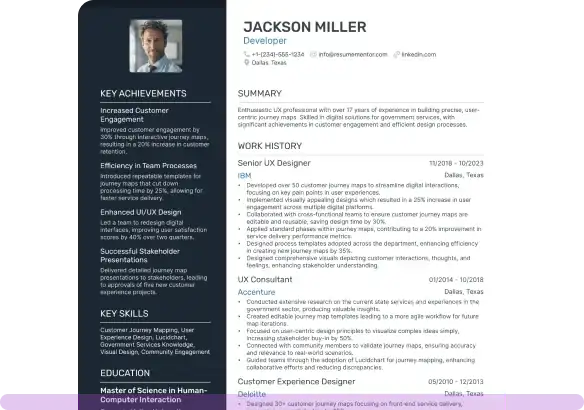

There are millions of unfilled cybersecurity jobs globally. You'd think that makes it one of the easier fields to break into or move up in. But talk to most cybersecurity professionals who are actively job hunting and you'll hear the same story: they're applying, they're qualified, and they're still not hearing back.
The problem usually isn't their skills. It's their resume.
Cybersecurity is one of the most credential-conscious fields in tech, and yet most candidates approach their resume the same way someone applying for a generic IT role would. They list tools, summarize job duties, and hope the hiring manager connects the dots. That approach works fine when competition is low. It doesn't work when you're up against a pool of candidates who all have the same tools on their resume and similar job titles in their experience section.
If your resume isn't getting traction, this guide will help you understand why and what to do about it.
The problem with most cybersecurity resumes
Open up a stack of cybersecurity resumes and they start to blur together almost immediately. You'll see the same tools listed (SIEM, firewalls, intrusion detection, penetration testing), the same vague job descriptions ("responsible for monitoring network security events"), and the same objective statements that could have been written by anyone.
The core issue is that most candidates describe what they did rather than what they're capable of proving. In a field as credential-heavy and risk-sensitive as cybersecurity, that distinction matters more than in almost any other industry. If you're not sure where your resume currently stands, browsing a few IT resume examples can help you see what strong ones look like and where yours might be falling short.
Think about it from the hiring manager's perspective. They're reviewing dozens of resumes for a single senior security role. Every candidate claims to have hands-on experience. Every candidate lists roughly the same tools. Without something that independently verifies the depth of your knowledge, you look like everyone else, regardless of how strong your actual background is.
Your resume has about six seconds before a hiring manager decides whether to keep reading or move on. That's not much time to make a case for yourself when your resume looks identical to the 40 others in the pile.
Why experience alone doesn't signal readiness anymore
Here's the uncomfortable reality: a job title doesn't tell a hiring manager much about what you actually know. "Security Analyst" at one organization might mean sophisticated threat hunting and incident response. At another, it might mean running vulnerability scans and escalating tickets. The title is the same. The depth of experience is completely different.
Hiring managers know this. And because they can't verify the substance behind your job title without a conversation, they look for other signals that give them confidence before scheduling that conversation.
Certifications are one of the most powerful signals you can put on a resume, specifically because they're independently verified. When a recognized credential appears on your resume, a hiring manager doesn't have to guess at your knowledge level. It's already been tested by a credentialing body with established standards. You either passed or you didn't.
This is why certifications carry so much weight in cybersecurity in particular. In most fields, a credential is a nice addition. In cybersecurity, it's often the first filter, especially for roles that involve risk management, security architecture, or leading a team. Understanding how to make your resume stand out in a competitive field starts with recognizing what hiring managers are actually scanning for.
Not all certifications carry the same weight
Before you go chasing every certification you can find, it's worth understanding how they're perceived at different career levels, because stacking up entry-level credentials when you're going for a senior role can actually work against you.
If you're earlier in your career, foundational certifications help you clear the initial screening. They demonstrate commitment and baseline knowledge, which matters when you don't yet have years of experience to point to.
But if you're targeting senior practitioner roles, security leadership positions, or anything that involves advising on organizational risk, the credential on your resume needs to match that level of responsibility. Hiring managers for those roles are looking for proof that you can think about security strategically, not just execute technical tasks.
The Certified Information Systems Security Professional (CISSP) is widely recognized as the benchmark credential for senior cybersecurity roles. It spans eight domains of security knowledge, from security architecture and asset management to software development security and identity management. It's also one of the credentials that enterprise employers and government agencies specifically filter for when filling leadership and high-stakes security positions.
What makes CISSP different from many other certifications is that it requires candidates to demonstrate not just technical knowledge, but the ability to apply security principles at a management and governance level. That's the kind of thinking senior employers need and it's what the credential signals on your resume before you've said a word in an interview.
If you're serious about moving into cybersecurity leadership roles, enrolling in a CISSP Bootcamp can improve your chances of earning the certification and getting it on your resume sooner. Many professionals also pursue programs such as UND's online cyber security master to strengthen their leadership, governance, and technical cybersecurity expertise.
How to present certifications on your resume so they actually work
A lot of candidates earn strong certifications and then undo the impact by burying them on their resume. Getting the credential is step one. Making sure it lands is step two. Choosing the right resume format also plays a big role in whether your certifications get the visibility they deserve.
A few things that make a real difference:
- Don't hide your certifications at the bottom. If CISSP is the most relevant credential for the role you're applying for, it shouldn't be buried after three pages of work history. Put it in your professional summary or in a certifications section that appears near the top of your resume. A hiring manager who is scanning specifically for that credential shouldn't have to dig to find it.
- List in-progress credentials. If you're currently preparing for CISSP, you can note it as "CISSP (in progress)" or "CISSP candidate." It signals forward momentum and shows you're actively investing in your expertise, which counts for something even before you've passed the exam.
- Connect certifications to your actual work. One of the most underused resume strategies is tying your credentials to specific accomplishments in your work experience section. Instead of listing CISSP in a corner of your resume and leaving it there, reference the relevant knowledge in your bullet points. For example: "Designed and implemented enterprise access control policy drawing on risk management frameworks across CISSP domains" is far more compelling than the certification sitting in isolation. It shows the employer the credential isn't just something you earned and forgot.
What else separates the resumes that get noticed
Certifications give your resume credibility. These next elements give it impact.
Quantify wherever you can. Numbers make your experience verifiable in a way that description alone doesn't. "Reduced incident response time" is a statement. "Reduced average incident response time from 4 hours to 45 minutes by redesigning the alert triage process" is a result. Aim for at least two or three concrete metrics per role in your work experience section.
Be specific about your domain. The more clearly your resume signals your area of depth, whether that's cloud security, governance and risk, red teaming, or application security, the more relevant you'll look to employers hiring for that specific expertise. A resume that tries to cover everything often ends up looking like it covers nothing deeply.
Tailor it to every role. Generic resumes produce generic results. Make sure the language on your resume reflects the priorities in the job posting, and know which resume keywords applicant tracking systems scan for. Use your skills section to show your technical toolkit at a glance, but cut anything generic. "Microsoft Office" is not a cybersecurity skill worth listing.
The resume is doing your first interview for you
The goal of your resume isn't to get you the job. It's to get you in the room. Every element on it should be working toward that single objective: giving a hiring manager enough confidence in your expertise that they want to find out more.
In cybersecurity, that confidence comes from a combination of things: demonstrated experience that's specific and quantified, domain expertise that's clearly communicated, and credentials that verify your knowledge has been tested. Get all three working together and your resume stops looking like everyone else's.
The candidates who consistently land interviews in competitive cybersecurity markets aren't necessarily the most experienced people applying. They're the ones who've made it easiest for a hiring manager to say yes. If you want a practical starting point, tailoring your resume to each role you apply for is one of the highest-impact changes you can make right now.
Related Articles

Continue Reading
Check more recommended readings to get the job of your dreams.
Resume
Resources
Tools
© 2026. All rights reserved.
Made with love by people who care.