
Is Your Professional Brand Invisible to AI? What Job Seekers Need to Know About LLM Search

Jul 30, 2026
|
12 min read
Recruiters and candidates are increasingly asking AI tools to vet people. If those tools can't find you, you don't exist.
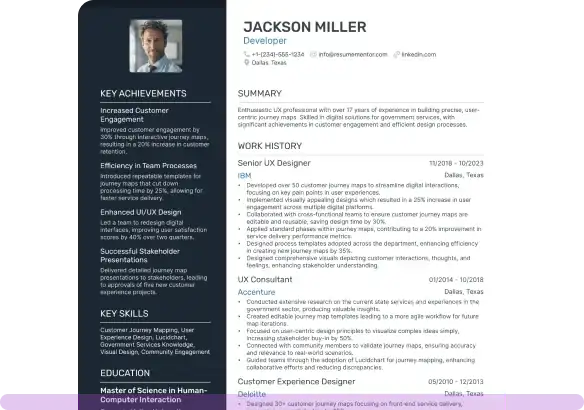
A hiring manager opens ChatGPT before they open your resume. That's not a hypothetical anymore. It's how a growing number of recruiters start their search. They type something like "background on Jack,AI Manager in Sydney" or "compare these two applicants for a marketing manager role," and whatever the AI says back becomes their first impression of you.
Here's the uncomfortable part: you can have a polished resume, an active LinkedIn profile, and years of solid experience, and still come back as a blank when someone asks an AI tool about you. That gap between how strong your career actually looks on paper and how visible you are to the AI tools now sitting in the middle of the hiring process is what's called AI search visibility. And for most job seekers, it's something they've never once thought to check.
This guide breaks down how AI and LLM search are reshaping hiring, why your professional brand might be invisible to tools like ChatGPT, Gemini, and Claude, and exactly what to do about it.
How AI and LLM Search Are Changing the Hiring Process
Hiring has always involved some form of search. What's changed is where that search happens and what it returns.
From keyword-matching ATS to AI-assisted candidate research
Applicant tracking systems have used keyword matching for years scanning resumes for the right job titles, skills, and phrases before a human ever sees them. That layer hasn't gone away. But a second layer has been added on top of it: recruiters and hiring managers now routinely use conversational AI tools to research candidates, industries, and roles before or after the ATS does its job.
This matters because ATS optimization and AI visibility solve two different problems. One gets your resume through a filter. The other determines what a recruiter learns about you once they start asking questions outside that system.
How recruiters actually use ChatGPT, Gemini, and Perplexity today
In practice, this looks less like a formal background check and more like the quick research any of us would do before a meeting. A recruiter might ask an AI tool to summarize a candidate's public background, compare two finalists' experience, or explain what a certain job title typically involves at a specific type of company. Recruiting teams have also started asking AI tools to help draft outreach, screen for culture fit signals, and even weigh in on offer comparisons when candidates ask "should I take this job or that one?" meaning your professional brand can influence a decision at the very end of the hiring funnel, not just the beginning.
None of this replaces a real interview. But it does mean an AI-generated first impression can shape the tone of everything that follows.
Why this is different from traditional Google SEO for your name
If you've ever Googled your own name to see what comes up, you already understand the basic idea of personal search visibility. AI search visibility works on a related but distinct principle. Google returns a ranked list of links for a human to click through. An LLM instead compresses everything it knows into a single generated answer and if the sources it's drawing from don't mention you clearly and consistently, you simply don't make it into that answer. There's no "page two" to fall back on. You're either part of the response or you're not.
What "AI Visibility" Actually Means for an Individual
Most of the conversation around AI search visibility has been aimed at companies and brands trying to get mentioned by ChatGPT. The same mechanics apply to individual professionals — but the stakes and the strategy look a little different.
Ranking in Google vs. being cited by an LLM
Ranking well in Google search results means your content is well-optimized and earns enough authority to outcompete similar pages. Being cited or recommended by an LLM is a different achievement: it means the model has encountered your name, your work, and your professional identity described consistently enough, across enough credible sources, that it feels confident repeating that information back to someone else. You can rank on page one of Google for your own name and still be nowhere in an AI-generated answer about your field.
Training data vs. real-time retrieval
LLMs generally form answers about you in two ways. Some of what they "know" comes from training data the broad snapshot of the web the model learned from, which is why older, more established content about you tends to carry weight. Other information comes from real-time retrieval, where tools like ChatGPT with browsing, Gemini, or Perplexity actively search and pull in current web content, including your LinkedIn profile, articles you've published, or recent news mentions. A strong AI visibility strategy accounts for both — content that's been out there long enough to be learned from, and content that's fresh enough to be found right now.
Why two similar resumes can produce very different results
Picture two marketing managers with nearly identical resumes, same years of experience, similar skills, comparable results. Run a simple AI search on each of them, and the outcomes can look nothing alike. One might return a clear, accurate summary of their background, pulled from a well-maintained LinkedIn profile and a guest article they wrote for an industry publication. The other might return nothing at all, or worse, a vague and slightly inaccurate guess stitched together from a sparse digital footprint. Same qualifications, completely different level of AI visibility — because visibility is earned through digital presence, not job performance alone.
Why Your Professional Brand Might Be Invisible to AI Search
If AI tools consistently can't find or confirm information about you, it's usually not because your career isn't strong enough. It's because of gaps in how that career is represented online.
Five signs you're AI-invisible:
- Your job titles, summaries, or descriptions read differently on your resume, LinkedIn, and any personal site
- Your LinkedIn "About" section hasn't been meaningfully updated in over a year
- You have no mentions, guest posts, interviews, or bylines anywhere outside your own profiles
- Your resume exists only as a PDF that's never posted anywhere public or crawlable
- Your professional summary uses generic language that could describe almost anyone in your field
Fragmented identity across platforms
If your LinkedIn headline calls you a "Senior Marketing Strategist," your resume says "Marketing Manager," and your personal website bio says "Growth Marketer," an AI model has no clean, consistent signal to work from. Humans can piece that together with context. Language models are far more literal; consistency is one of the strongest signals you can give them.
Thin or outdated content
A LinkedIn profile with a one-line summary and no activity in the featured section gives an AI tool very little to work with. The more specific, current, and detailed your public professional content is, the more an LLM has to draw on when someone asks about you.
No third-party mentions
This is often the biggest gap. Everything you write about yourself carries less weight than something a credible third party says about you. If your entire digital footprint is self-authored your resume, your LinkedIn, your personal bio and AI model has no independent confirmation that any of it is accurate or noteworthy.
Overreliance on gated or uncrawlable formats
A resume locked inside a PDF that only exists in your email outbox or an applicant portal isn't something an AI tool can find. If none of your professional information lives somewhere public and indexable, there's nothing for a model to learn from in the first place.
How to Test Whether AI Tools Recognize Your Professional Brand
Before fixing anything, it's worth running a quick audit to see where you currently stand. This takes about ten minutes.
Open each major AI tool and ask a version of: "What do you know about [Your Full Name], a [your job title] based in [your city]?" Try a second prompt too: "Can you find [Your Name]'s professional background or LinkedIn profile?"
| Platform | Sample Prompt | What to Look For | Typical Result if Unoptimized |
|---|---|---|---|
| ChatGPT | "Who is [Name], a [title] in [city]?" | Accurate job title, employer, and skills | No result, or a confused mix-up with someone else of the same name |
| Gemini | "Find [Name]'s professional background" | Recent, specific details pulled from live sources | Generic non-answer or outdated information |
| Claude | "What do you know about [Name] in [industry]?" | Consistent, verifiable summary | No knowledge of the individual at all |
| Perplexity | "[Name] [title] [city] background" | Cited sources (LinkedIn, articles, mentions) | Sparse or no citations returned |
Run the same prompt two or three times on each platform, since answers can vary slightly between runs. What you're looking for isn't perfection — it's whether the model has any accurate, consistent picture of who you are and what you do. If the answer is vague, wrong, or blank across the board, that's your starting point.
How to Build AI Search Visibility as a Job Seeker or Professional
Once you know where the gaps are, closing them comes down to a handful of deliberate habits rather than one big fix. Much like the discovery phase of a successful project, identifying your visibility gaps and defining a clear strategy upfront makes every subsequent branding effort more effective.
Strengthen your LinkedIn profile as a primary data source
LinkedIn is one of the most heavily cited sources across AI platforms right now, particularly for career-related queries. A detailed, specific "About" section, a headline that states your actual value rather than just your job title, and a regularly updated activity feed all give AI tools more accurate material to draw from.
Create consistent, keyword-rich descriptions across every platform
Your resume, LinkedIn, personal website, and any professional bio should describe your role, industry, and specialty in matching language. This doesn't mean copying the same paragraph everywhere, it means making sure a model reading all of them would come away with the same understanding of who you are.
Publish original content AI models can cite
Articles, LinkedIn posts, or guest contributions that reflect real expertise give AI tools something concrete to reference. Content in the 500–2,000 word range tends to perform particularly well for this, since it's substantial enough to be treated as a credible source rather than a passing mention.
Get mentioned on third-party, authoritative sites
This is where the biggest visibility gains tend to happen. LLMs weigh third-party validation heavily; a bio you write about yourself carries far less signal than a credible outlet or industry publication mentioning your work. This is one reason personal branding experts increasingly treat "getting cited" as a distinct skill from simply having a good LinkedIn profile.
If building this kind of editorial presence feels daunting to do alone, agencies that specialize in LLM optimization can help secure the kind of authoritative mentions designed specifically to be picked up and trusted by AI search tools, a more targeted approach than generic PR outreach. Whether you pursue that route or build mentions organically through guest posts and industry contributions, the goal is the same: give AI models multiple, consistent, trustworthy sources that confirm who you are and what you do.
Keep a personal website or portfolio that's crawlable
Even a simple personal site with your bio, work samples, and a blog gives AI tools a stable, ownable source of information about you that doesn't depend on any single platform's algorithm or visibility settings.
Maintain consistency across resume, LinkedIn, and press mentions
Whenever new information is added anywhere — a new title, a new skill, a new accomplishment — update it everywhere else, too. Fragmented timelines are one of the fastest ways to confuse both recruiters and AI models alike.
Resume Optimization Still Matters — Here's Why It's the Foundation
None of this replaces the importance of a strong resume. If anything, it raises the bar for what your resume needs to do.
ATS optimization and AI visibility are related, not identical
A resume built to pass an ATS focuses on keyword matching and formatting that parses cleanly. AI visibility is broader — it's about how your professional identity is represented across the entire web, not just inside one document. You need both working together: a resume that gets you through the initial filter, and a public digital footprint that holds up when someone looks further.
How a strong resume feeds your broader professional brand
Your resume is often the most concentrated, accurate summary of your career that exists anywhere. The language you use in it — your job titles, your measurable accomplishments, your core skills — should be the same language echoed across your LinkedIn and any other public profile. When that language is sharp and consistent, it becomes the backbone that both recruiters and AI tools rely on to understand your value.
If your resume itself needs work — whether that's tightening your professional summary, making your achievements measurable, or formatting it to pass ATS filters cleanly — that foundation should come first. Everything else described here builds on top of a resume that already communicates your experience clearly.
Common Mistakes That Keep Job Seekers Invisible to AI
A few habits show up again and again among professionals who test poorly on the AI visibility audit above:
- Copy-pasting the same generic summary everywhere. Vague phrases like "results-driven professional" give a model nothing distinctive to associate with your name.
- Ignoring the LinkedIn "About" and featured sections. These are among the most heavily weighted parts of a profile for both recruiters and AI tools, yet they're often the most neglected.
- Having no public-facing work samples or writing. Without something to point to, there's no way for an AI model — or a human — to verify your expertise beyond your own claims.
- Treating AI visibility as a one-time fix. Models are updated regularly, and real-time retrieval tools pull from current content. A profile optimized once and never touched again will drift out of date.
A Quick-Start Checklist: Making Your Professional Brand AI-Visible
- Run the self-audit prompts above across at least three AI platforms
- Rewrite your LinkedIn headline to state your specialty, not just your title
- Expand your LinkedIn "About" section with specific, measurable accomplishments
- Align the language across your resume, LinkedIn, and any personal site
- Publish at least one piece of original content (article or detailed post) this quarter
- Pursue at least one third-party mention, guest post, or interview opportunity
- Set up a simple personal website if you don't already have one
- Re-run your AI visibility audit every few months and adjust as needed
FAQs
Does ChatGPT actually know who I am?
It depends on your digital footprint. If you have a well-maintained LinkedIn profile, published content, or mentions on other sites, tools with browsing or retrieval capabilities can find and summarize that information. If your presence is thin or inconsistent, the model may return nothing or an inaccurate guess.
Can recruiters really search for candidates using AI tools?
Yes. While AI search hasn't replaced dedicated recruiting platforms and applicant tracking systems, it's increasingly used as a research step — for background checks, comparing candidates, or getting quick context before an interview.
How is AI search different from LinkedIn SEO?
LinkedIn SEO focuses on ranking well within LinkedIn's own search function. AI search visibility is broader — it's about whether external AI models like ChatGPT or Gemini can find and accurately describe you, which depends on your presence across LinkedIn and beyond it.
Do I need a personal website to be visible to AI?
It's not strictly required, but it helps. A personal website gives you a stable, fully controllable source of information that doesn't depend on any single platform, which strengthens how consistently AI tools can describe you.
How long does it take for AI tools to "learn" about a new professional brand?
It varies by platform and depends on whether the model relies on training data or real-time retrieval. Content that's been live and consistent for months tends to be picked up more reliably than something published last week, though tools with live browsing can surface recent updates faster.
Is this the same as SEO for my resume?
It's related but broader. Resume and ATS optimization ensure your resume gets through automated filters. AI search visibility covers how your entire professional identity — resume included — is represented and cited across the web.
Will optimizing for AI search hurt my traditional job search efforts?
No. Every step described here — a clearer LinkedIn profile, consistent messaging, published content, third-party mentions — also strengthens your traditional job search. The two go hand in hand rather than competing with each other.
Conclusion
AI search visibility has quietly become part of the hiring process, whether job seekers have noticed it or not. Being invisible to these tools isn't a reflection of a weak career — it's usually a matter of fragmented, thin, or purely self-authored content that AI models can't confidently draw from.
The fix isn't complicated, but it does require consistency: a resume and LinkedIn profile that tell the same clear story, original content that demonstrates real expertise, and third-party mentions that validate what you already know to be true about your work. Start with the audit, work through the checklist, and treat your professional brand as something that needs the same ongoing attention as your resume itself.
Related Articles
Continue Reading
Check more recommended readings to get the job of your dreams.
Resume
Resources
Tools
© 2026. All rights reserved.
Made with love by people who care.