
Why Resume Optimization Matters in 2026’s Job Market

Feb 24, 2026
|
12 min read
How to tailor your resume for modern screening systems and boost visibility on Jooble, LinkedIn and Indeed.
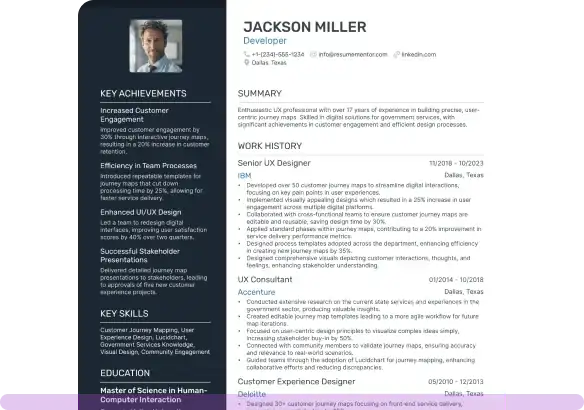
Let’s recall a time when you were searching for something online: how often did you click through to the second page of Google? Search engine optimization helps websites rank higher for relevant queries, enabling them to attract clients more efficiently. Of course, we’re not saying that finding the perfect candidate for a job opening and buying an air fryer are the same thing – but there’s more in common than you might think.
In 2026, resume optimization is a necessary step to ensure recruiters know you and your skills. If it’s not optimized, it won’t be rejected – because the recruiter won’t even see it.
What does modern resume optimization for job search sites involve? It’s the process of adapting the content, structure, and format of a resume to the search and screening systems used by job boards and recruiting platforms. While this step previously simply increased the chances of landing a more attractive position, today it’s a must. Let’s figure out how to get the most out of search engine optimization in 2026.

How Resume Screening Works on Jooble, Indeed, and LinkedIn
Before reaching a recruiter, your CV goes through layers of automated screening. Job boards and professional platforms rely on search algorithms, filtering logic, and ranking systems to decide which resumes appear in results and which remain invisible. Jooble, Indeed, and LinkedIn approach this process differently, but all three prioritize relevance, structure, and keyword alignment over narrative or design. We focused on each site individually.
What makes Jooble different as a job site
Unlike any other job search site, Jooble isn’t a typical employer database and communication channel. It’s an aggregator of job openings collected from other sites, blogs, and even individual company pages. The selection of openings is greater, and the chances of finding a suitable position are higher – but so is the dependence on optimization. If you want to find jobs on Jooble, consider the following:
- Search logic instead of profiles. Both resumes and job postings are processed as search results: the algorithm doesn’t analyze career histories, but rather compares your skills, work experience, and roles as keywords. Therefore, it’s important to consider them: relevant experience may not translate well if you use imprecise wording.
- International search support for different positions. Jooble works with hundreds of countries - in some of them, your position may be more highly paid. Tailor your resume to suit different countries and your specific field: for example, IT and hospitality require different soft skills.
- Analytical value for job seekers. Deep machine analytics collects valuable data that LinkedIn and Indeed don’t: that will help you understand what companies expect from you. The platform lets you see which skills and positions appear most frequently in job postings, helping you tailor your resume to current requirements.
Essentially, your resume is treated by the system not as a human resource unit, but as a search document. You can easily use this to your advantage: the winning CVs are those that accurately reflect marketplace language, in-demand skills, and actual job titles. Besides common CV writing tips, use optimization advice to boost your CV.
How Indeed ranks and filters resumes
Indeed has its own tools for ranking and processing candidates: today, algorithms are used more extensively in the system than on other sites. For your resume to even be noticed, it will go through several filtering stages. This will increase your chances:
- Context. Keywords are a must-have; we’ve already covered this. Moreover, the algorithm considers not only the presence of keywords but also their placement. Skills and experience sections carry more weight than random mentions.
- Relevance and freshness of experience. Recent roles and projects are ranked higher. Older experience gradually loses weight, even if it is formally relevant.
- Format and ATS readability. The resume must be correctly parsed by the system. Complex layouts, tables, icons, or non-standard headers can lead to data loss during processing.
Indeed, it’s important that you stay active: apply to job openings, update your resume, and update your profile. In addition to search engine filters, don’t forget the filters of each employer: if your experience or skills don’t pass, your resume won’t even be seen. This filters out hundreds of candidates and deprives the company of flexibility, but at the same time, it increases the likelihood of a professional match.
How LinkedIn recruiters search for candidates
We used to think of LinkedIn as something completely different from typical job-searching sites: yes, it has more social network tools, but its massive ranking and professional tools can’t be ignored. Today, most recruiters don’t even need to post a vacancy or browse through the job applications to find the candidate: the inner search does the job. How to use this to your advantage?
It has many similarities with Jooble and Indeed: the algorithm highlights all mentions that match the HR search query. Recruiters use Boolean queries, combining skills, job titles, seniority, location, and employment type.
An interesting point: LinkedIn highlights the Skills section and scans it separately, just like the Resume Summary. Therefore, if you don’t add hard skills, you risk getting lost in the flood of candidates. Furthermore, the site doesn’t use ATS, but even though algorithms can let it slide, a mismatch between the job posting and the resume will reduce recruiter trust: prove your experience with a portfolio or cover letter.
Keyword Optimization: The Core of Resume Visibility
We’ve emphasized the importance of keywords so many times, but how do you use them correctly? Your goal isn’t to stuff your resume with relevant words and phrases, but to refine the existing wording so it aligns with search queries.
Algorithms aren’t people; they can’t understand the meaning of what you’re trying to convey or draw conclusions. They analyze terms, numbers, titles, and specific data. Give them what they need, and you’ll get results. Analyze popular job postings – you’ll likely find recurring key requirements and terminology; this forms the core of your resume. Edit your resume by adding them to the relevant sections, and you’ll see how search engines respond and rank your resume higher.
Tailoring Your Resume for Jooble, Indeed, and LinkedIn
Different job platforms process resumes in different ways. Optimizing a resume for visibility in 2026 means understanding how each system evaluates candidates and adjusting content, structure, and focus accordingly. These key characteristics will help you tailor your resume to the requirements of these different platforms:
| Aspect | Jooble | Indeed | |
|---|---|---|---|
| Platform type | Job aggregator | Job board with ATS | Professional search network |
| What gets ranked | Keywords and job titles | Resume content and profile data | Profile content and activity |
| Importance of job title | Critical | Very high | Maximum weight |
| Focus on skills | High | Very high | High, especially the Skills section |
| Formatting impact | Medium | High | Low for profile visibility |
| Role of user activity | Minimal | Moderate | Significant |
| Primary use case | Market analysis and role discovery | High-volume applications | Direct recruiter sourcing |
Resume optimization isn’t one-size-fits-all. First, research what exactly needs to be addressed for different job search platforms. A clear structure and keywords are universal. At the same time, pay attention to the skills section for Indeed, the completeness of the profile on LinkedIn, and the international accessibility of the resume for Jooble. Small adjustments lead to big success.
Formatting Tips That Improve Resume Performance
It’s both about impression and visibility - algorithms read data, and it’s easier for recruiters to find the necessary information at a glance. These practices will help achieve this:
- Simple single-column layout. ATS and job boards read a simple structure more easily and quickly.
- Standard section headings. Experience, Skills, and Education – don’t overcomplicate things.
- ATS-friendly fonts. Arial, Calibri, Helvetica, and Times New Roman ensure stable parsing.
- Little to no visual elements. Icons, tables, and graphics often disrupt the structure during processing.
- Consistent design style. This improves readability and visual appeal.
Formatting is like a barrier between your resume and the selection system. The more readable and clearer the structure, the weaker the barrier – and the higher the chance of it sticking in the recruiter’s mind.
Common Resume Optimization Mistakes
Of course, your resume can be rejected due to a lack of experience or inconsistent skills. But what if everything is perfect? Then let’s look at the most common optimization mistakes:
- Failure to prioritize experience. Instead, focus more on relevant experience.
- Too vague a positioning. Don’t try to be universal; this can shift the focus.
- Ignoring market language. Avoid unconventional titles and terms.
- Lack of context in career gaps. If there are gaps in your resume, add a short description to each.
The proper CV will make you more relevant on two fronts: for search engines and for the HR department. Your job is to combine both approaches into one document.
Final Checklist: Resume Optimization for Maximum Visibility
2026 proved that optimizing your resume is a must. Treat it like the first step of recruitment: get noticed by search engines before you get noticed by HR. This guide will help you promote your resume on popular platforms by using keywords, highlighting relevant experience, and targeting specific website queries. Good luck with your search!
Related Articles

Continue Reading
Check more recommended readings to get the job of your dreams.
Resume
Resources
Tools
© 2026. All rights reserved.
Made with love by people who care.